
If your freezer is freezing cold but your refrigerator compartment is warm, cold air is trapped in the freezer. In 95% of standard refrigerators, all cooling happens in the freezer; a fan circulates that cold air through a motorized damper into the fresh food section. When this circulation stops, the most common causes are a frosted-over evaporator coil (defrost system failure), a failed evaporator fan motor, or a stuck air damper control.
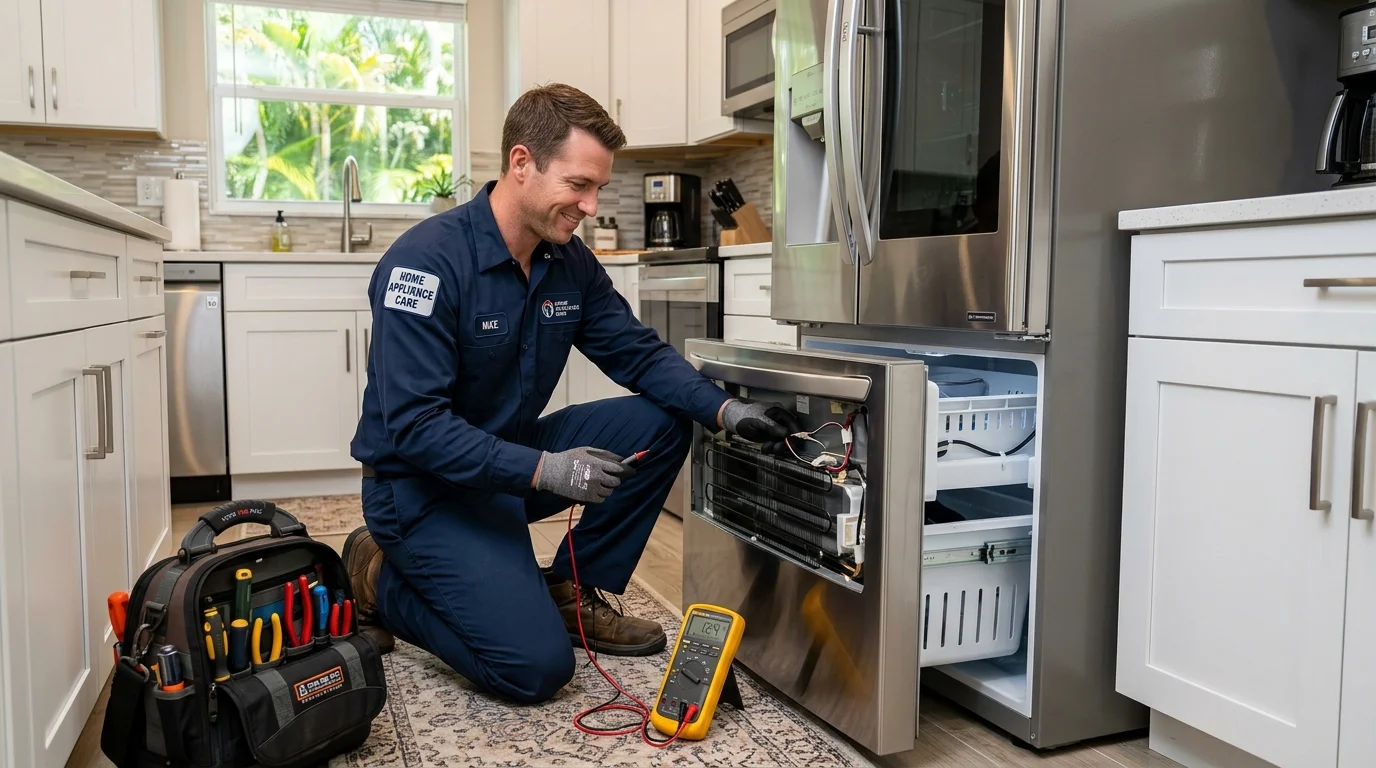
It is one of the most frustrating appliance dilemmas homeowners face: your ice cream is rock solid, your ice maker is dropping cubes, but your milk and produce on the refrigerator side are hovering at a dangerous 52°F.
Before you assume your compressor has given up and you need a new $2,000 refrigerator, take comfort in the fact that your compressor is actually running. The cooling cycle is generating refrigeration; it simply isn’t getting delivered to your fresh food shelves.
How Airflow Actually Works in Modern RefrigeratorsUnless you own a luxury built-in model like a Sub-Zero with dual dedicated compressors, your appliance uses a single sealed cooling system located behind the back wall of your freezer.
The evaporator coils in the freezer drop down to roughly -10°F to -15°F. A small electric motor called the evaporator fan draws air across these frigid fins and forces it upward into an air duct. A small motorized flap called the air damper opens and closes to allow just enough of this sub-zero air into the refrigerator cabin to maintain a food-safe 37°F.
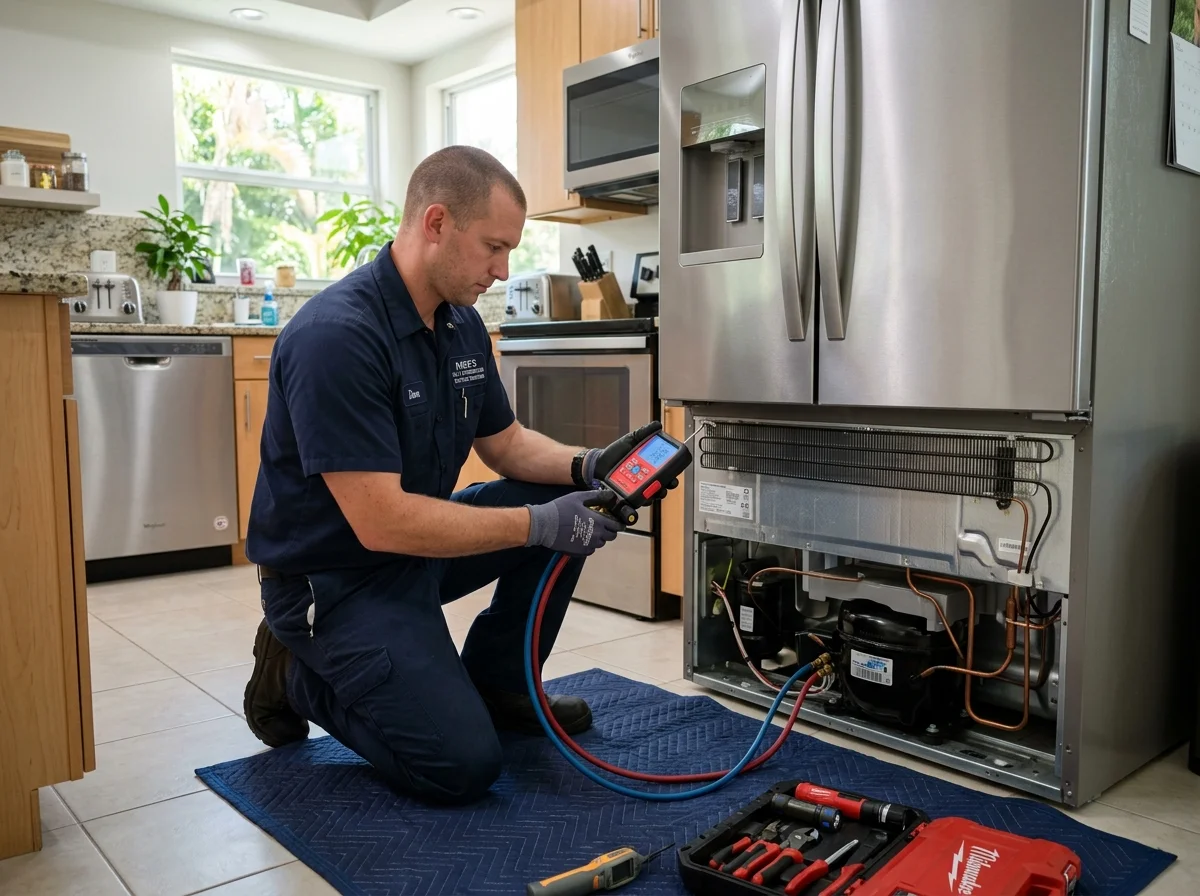
The 6 Most Common Culprits
1. Evaporator Coils Choked with Frost (Defrost System Failure)
Every 8 to 12 hours, your refrigerator initiates an automatic defrost cycle. An electric heating element warms the evaporator coils for roughly 20 minutes to melt off normal frost buildup.
If the defrost heater element, the bi-metal defrost thermostat, or the defrost timer board fails, this frost never melts. Within 3 to 4 days, ice builds up like a solid snowbank over the coil fins. Air cannot pass through the ice, so the fan cannot push cold air into the refrigerator cabin.
The Sign: Look at the back interior wall of your freezer. If you see thick snow-like frost creeping through the vents, your defrost circuit has failed. Explore our frost buildup and defrost repair service.
2. Failed Evaporator Fan Motor
Even if your coils are completely free of frost, cold air will not circulate if the fan motor itself has burned out.
The Sign: Open the freezer door and manually press down the door light switch. Listen closely. You should hear a steady rush of air and the hum of the fan. If there is absolute silence or a loud screeching/chirping sound, the motor bearing or electrical winding has failed.
3. Stuck or Broken Air Damper Control
The damper is a small plastic housing located in the top corner where cold air enters the fresh food section. It contains a motorized baffle door regulated by a thermostat sensor. If the tiny plastic gears strip or the motor burns out with the door shut, zero cold air can enter the fridge.
4. Blocked Return Air Vents
Refrigeration requires a complete loop: cold air enters from the top, and warmer air returns through return vents at the bottom. If large bread loaves, frozen meat boxes, or grocery bags are pushed tightly against the air intake vents, airflow grinds to a halt.
5. Clogged Condenser Coils & High Florida Humidity
In Clearwater and Pinellas County, airborne humidity is constant. When the condenser coils beneath or behind the refrigerator become matted with pet dander and dust, heat cannot dissipate. The compressor runs hotter and longer, degrading cooling capacity until the fresh food side warms up first.
6. Thermistor or Control Board Misreading Temperature
The thermistor is an electronic temperature sensor that changes electrical resistance based on cabinet heat. If the refrigerator thermistor fails, it may signal to the control board that the compartment is already at 37°F when it is actually at 50°F, leaving the damper closed.
Diagnostic Comparison Table| Suspected Component | Quick Diagnostic Check | Estimated Repair Cost |
|---|---|---|
| Defrost Heater / Thermostat | Heavy snow/frost on freezer rear wall | $150 – $280 |
| Evaporator Fan Motor | Silence or chirping when door switch is held | $150 – $270 |
| Air Damper Assembly | No airflow felt at upper fridge louvers | $130 – $230 |
| Thermistor / Sensor | Multimeter resistance test shows open loop | $110 – $190 |
While rearranging food to clear return vents is a simple DIY fix, testing defrost heaters and evaporator fan circuits involves high-voltage live testing and removing delicate plastic interior liners. Inexperienced handling can easily snap plastic tabs or puncture aluminum evaporator tubing, which instantly ruins the entire sealed system.
If your milk has started to sour and simple airflow clearing doesn't drop the temperature within 4 hours, call our certified Clearwater dispatch line at (727) 387-0008. Technicians arrive with the diagnostic equipment and replacement parts needed to resolve cooling loss on the spot.
In standard residential refrigerators, all active cooling takes place in the freezer evaporator coil. Cold air is blown into the fresh food section by a motorized evaporator fan. When coils frost over or the fan burns out, cold air remains trapped in the freezer.
Per USDA guidelines, perishable food kept above 40°F for more than two hours should be discarded. Keep the refrigerator door shut to retain remaining cold while awaiting technician arrival.
Typical repairs range between $150 and $290 for evaporator fan motor replacement or defrost system element/thermostat repair.
Need Your Refrigerator Cooling Today?
Our screened local Clearwater technicians are ready with same-day emergency dispatch.
Call (727) 387-0008 Now